
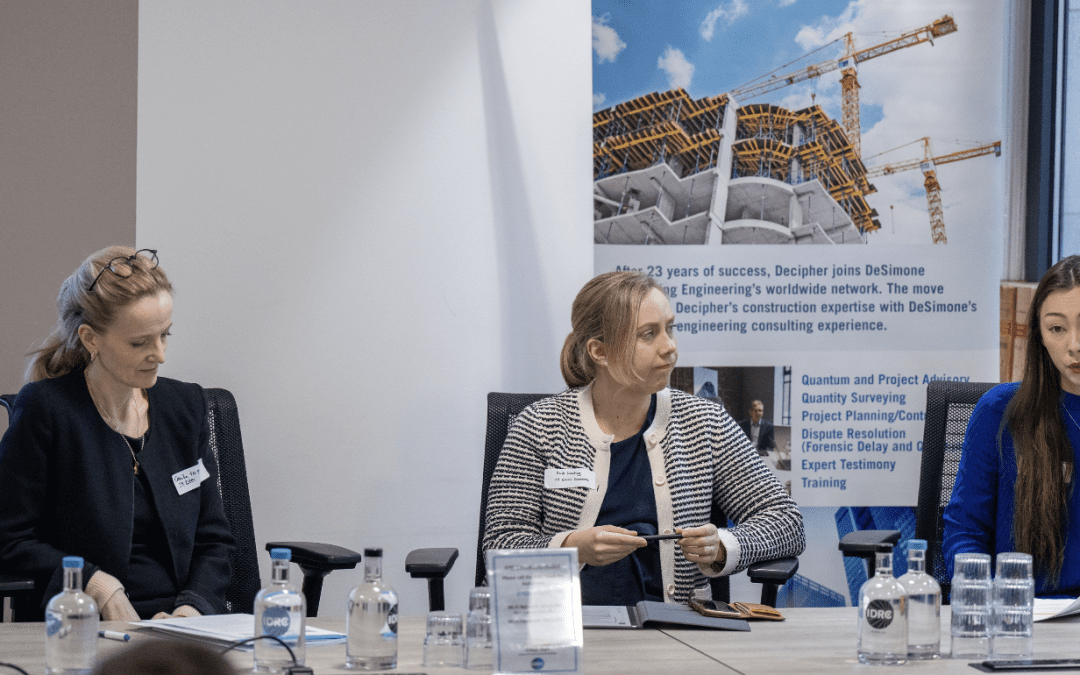
In February 2025 a collection of outstanding experts joined us to examine topics critical to construction in 2025. First up was a look at sustainability. The team opened with a definition of sustainability, which was that of “Meeting the needs of the present without compromising the future”. This is taken from the 1987 Bruntland Commission on sustainable development.
What the Contracts Say
There are sustainability elements in all the main contracts:
- FIDIC suggests that contractors should take necessary measures and reduce impacts on the environment. There is of course potential for ambiguity in that statement. As we all know, in law, with ambiguity comes the opportunity for dispute. It is, perhaps, likely that more specific net zero provisions will be developed by FIDIC in future.
- In the JCT there are some key changes in the latest form. Particularly in clauses 2.1.5 and 2.2.2. In principle it’s quite revolutionary but is lacking in carrot or stick. In addition, the team cautioned against potential changes to liability.
- NEC was the first construction contract to bring in a contractual requirement for climate change. It aims to reduce impact of construction. The NEC as you might expect is very much focused on keeping changes in the scope of the project. They give helpful examples of what might be included. Option X29 Climate Change was developed to signpost climate related issues in the body of the contract, namely the Climate Change Requirements.
Of course a possible risk arises from the tension between the need to implement measures to tackle climate change, and factors such as tight deadlines, material availability, lack of expertise, and value engineering. If the industry is to address this, contracts must be designed to adequately protect and promote sustainable practices at every stage.
The Chancery Lane Project is perhaps one of the most significant bodies in the legal sector in relation to climate change and sustainability . They have produced a raft of potential contractual clauses and options for sustainable contracting, many of which focus on encouragement rather than punitive measures for sustainable development.
Climate and Case Law
With construction being such a big contributor to carbon emissions, the impact of the entire supply chain is also something to consider. Legal cases are already starting to emerge around the concepts that might be impacted by climate change law. Some examples include:
- Asmania v Holcim – inhabitants of the Indonesian island of Pari are suing a Swiss-based major buildings materials company Holcim for proportional compensation for climate change-related damages on Pari (amongst other remedies).
- In the UK we’ve seen the more obvious case of the Oxford St Marks and Spencer. This led to the successful overturning in court of the Secretary of State’s refusal to grant permission for demolition of their existing building in London.
Impacts resulting from climate change, include events such as the ‘melting’ of cars by buildings in central London. Architects and engineers are being actively encouraged to consider what might be considered ‘reasonably foreseeable’ in terms of the impact of the changing climate on their projects.
New Technologies & The Courts
The team also looked to some of the potential responses of courts as a result of climate change cases and the use of emerging technologies and techniques to tackle sustainability. These include:
- The 1980 case of IBA v EMI and the use of new technologies / foreseeable risks. It may well be the case that new materials may be shunned as too high risk, until fully proven.
- Similarly, the case of University of Manchester v Hugh Wilson & Womersley highlights the importance of ensuring clients are clear on the risks of employing new construction techniques on their projects.
The use of new materials and technologies therefore is likely to bring with it various attendant risks. These should be carefully managed and considered in commercial, practical and contractual terms.
In conclusion then, the challenges are being considered and contracts and courts alike are seeking to tackle them. However, it seems the key is to take care. Take advice and consider what the impact not just of climate change, but of tackling climate change might be. Thanks to Amelia Ku-Neale for chairing, and to Camilla ter Haar and Ruth Keating for their valuable contributions.